When external stresses in a system--physical, social or virtual--are relieved through impulsive events, it is natural to focus on the attributes of these avalanches. However, during the quiescent periods between them, stresses may be relieved through competing processes, such as slowly flowing water between earthquakes or thermally activated dislocation flow between plastic bursts in crystals. Such smooth responses can in turn have marked effects on the avalanche properties. Here we report an experimental investigation of slowly compressed nickel microcrystals, covering three orders of magnitude in nominal strain rate, in which we observe unconventional quasi-periodic avalanche bursts and higher critical exponents as the strain rate is decreased. Our experiments are faithfully reproduced by analytic and computational dislocation avalanche modelling that we have extended to incorporate dislocation relaxation, revealing the emergence of the self-organized avalanche oscillator: a novel critical state exhibiting oscillatory approaches towards a depinning critical point. This theory suggests that whenever avalanches compete with slow relaxation--in settings ranging from crystal microplasticity to earthquakes--dynamical quasi-periodic scale invariance ought to emerge.
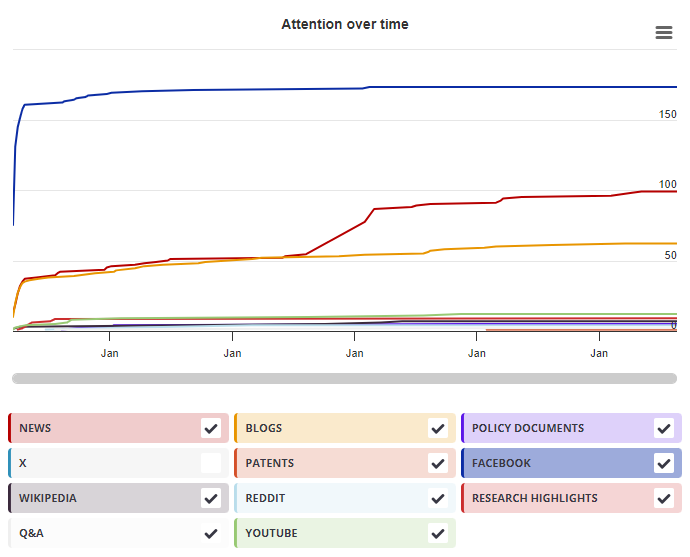
This research output has an Altmetric Attention Score of 15. This is our high-level measure of the quality and quantity of online attention that it has received. This Attention Score, as well as the ranking and number of research outputs shown below, was calculated when the research output was last mentioned on 31 March 2021.
All research outputs
#2,763,928
of 28,841,988 outputs
Outputs from Nature
#50,680
of 105,825 outputs
Outputs of similar age
#18,266
of 211,472 outputs
Outputs of similar age from Nature
#671
of 1,069 outputs
Altmetric has tracked 28,841,988 research outputs across all sources so far. Compared to these this one has done particularly well and is in the 90th percentile: it's in the top 10% of all research outputs ever tracked by Altmetric.
So far Altmetric has tracked 105,825 research outputs from this source. They typically receive a lot more attention than average, with a mean Attention Score of 99.5. This one has gotten more attention than average, scoring higher than 52% of its peers.
Older research outputs will score higher simply because they've had more time to accumulate mentions. To account for age we can compare this Altmetric Attention Score to the 211,472 tracked outputs that were published within six weeks on either side of this one in any source. This one has done particularly well, scoring higher than 91% of its contemporaries.
We're also able to compare this research output to 1,069 others from the same source and published within six weeks on either side of this one. This one is in the 37th percentile – i.e., 37% of its contemporaries scored the same or lower than it.